When a California personal injury firm reached out in early 2026, they had a strong-looking multi-vehicle auto case on their hands – but the carrier was already sending lowball signals even before a formal demand was sent. The attorney’s question was direct: “Are we missing something the adjuster is seeing that could be tanking the valuation?”
The answer was yes. The difference turned out to be more than $85,000.
The Client and the Challenge
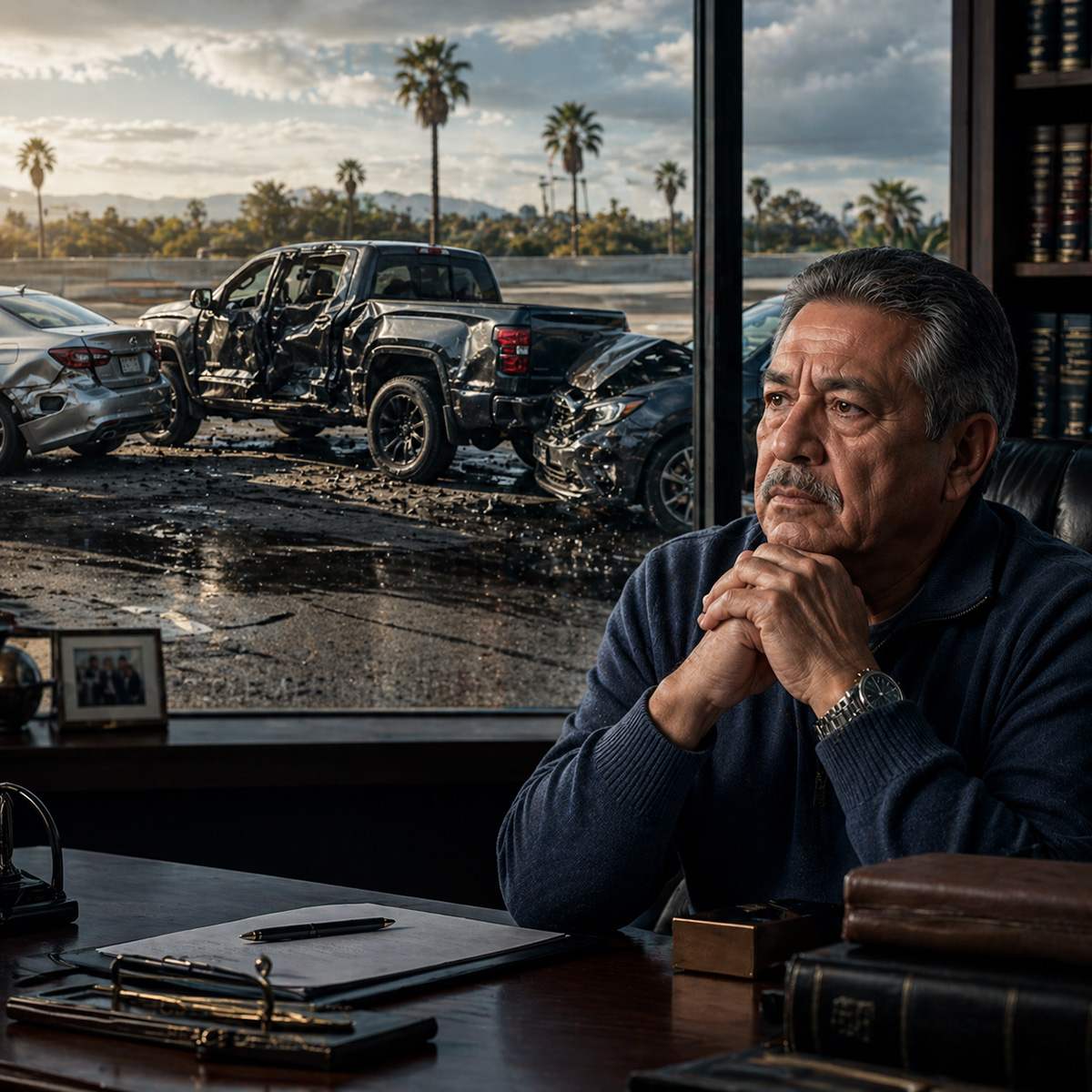
The client was a 66-year-old man involved in a three-vehicle rear-end collision on a California freeway while traveling in the middle position. He felt two distinct impacts. Property damage was significant: the at-fault vehicle showed heavy front-end intrusion with buckling and fluid leaks; the client’s vehicle sustained frame damage, buckled bed panels, and was a clear total loss; the lead vehicle had visible rear bumper and undercarriage damage consistent with a heavy impact.
Emergency room treatment occurred the same day with CT scans and cervical X-rays. Follow-up care had begun with a specialist. Medical specials were already in the mid-five figures, and the client had high UM/UIM limits through his own carrier plus Medicare Advantage coverage. No demand package had been sent yet, but the firm sensed the defendant carrier was undervaluing the case based on initial communications.
The Pre-Demand Case Audit Process
Within 48 hours of receiving the secure file, I reviewed the materials exactly the way a senior bodily injury adjuster (and Colossus) would:
Step 1: Event & Impact Severity Analysis
Using the available vehicle photographs, I documented the heavy impact mechanics—pushed-in front ends, frame buckling, and tow-hitch damage—establishing clear mechanism of injury with no causation red flags. I also flagged that the defendant carrier had not provided full damage documentation or recorded statements despite repeated requests, citing specific California insurance code violations (§ 2695.5 and § 2695.7) that strengthen the file.
Step 2: Coverage & Eggshell Plaintiff Review
The client’s age, combined with the potential for pre-existing conditions common in Medicare-age claimants, made this a classic eggshell plaintiff scenario. I mapped every coverage layer: the client’s own UM/UIM bodily injury limits, Med Pay, and the need for an immediate Medicare Secondary Payer lien notice to avoid future recovery delays.
Step 3: Documentation Gap & Demand Package Re-Engineering
The audit identified missing high-value elements:
- No client affidavit detailing pre-accident vs. post-accident functional limitations
- No photographs of visible injuries or bruising
- No confirmation on CHP report or additional out-of-pocket expenses
- No supplemental specialist narrative tying the heavy impact to the injuries
I drafted targeted recommendations, including a client questionnaire, requests to the client’s own carrier for a courtesy CHP report and UM/UIM notice, and precise language for a policy-limits demand that highlighted the impact severity and the client’s high UM/UIM limits.
The Results
The firm acted on every recommendation within 10 days. They obtained the missing client statement, injury photographs, pre-existing history clarification, and ER records (including radiology). A strong policy-limits demand was sent to the defendant carrier with notice of the client’s UM/UIM coverage.
Within weeks the carrier requested an extension “to involve the supervisor.” The case settled for 45% higher than the initial lowball indication the firm had received—without filing suit. The client received full compensation for medical bills, lost wages (where applicable), and substantial general damages, all while avoiding the stress and delay of litigation.
The firm later told me the audit report became their new internal checklist for every significant auto case.
What Made This Engagement Different
- Immediate implementation — the firm executed every recommendation quickly.
- Cross-training — the case manager joined the strategy call and now proactively flags similar gaps during intake.
- Tone-setting — citing specific insurance code violations and demanding “all best quality color photographs” signaled trial-ready experience to the carrier.
Lessons Other Personal Injury Firms Can Apply Today
- Never assume the carrier has the full picture—provide it first through a carrier-ready demand package.
- Treat the window before sending demand as your highest-leverage period for filling Colossus gaps.
- Use insider intelligence audits to both maximize the current file and build firm-wide systems.
- Document everything through the adjuster’s (and Colossus) lens, not just a jury’s.
- This single pre-demand audit more than paid for itself many times over and protected the client from years of unnecessary litigation.
Want the same advantage for your caseload?
Whether you have one complex auto file or an entire practice that could benefit from systematic insider intelligence, the process starts with a conversation.